Guide Dogs for the Blind
Then and now...
Founded in 1942,
Guide Dogs for the Blind, Inc. has provided over 14,000 dogs for visually impaired persons across North America. Guide Dogs was
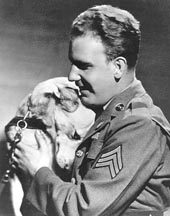
originally started to aid World War II veterans coming back from the war with wounds that affected their sight. There are now two campuses, one in San Rafael, California and the other in Boring, Oregon. The first pair to graduate from Guide Dogs for the Blind was a German shepherd named "Blondie" and her partner, Sgt. Leonard Foulk.
The breeds of dog used in this program include Labrador Retrievers, Lab/Golden Crosses, and Golden Retrievers. Puppies
are bred at the facility in San Rafael and at two months of age are given to puppy raising volunteers. Puppy raisers socialize and train dogs until they are about sixteen to eighteen months old. They take them to stores, restaurants, school, work, and other exciting places during the year. Raisers also teach pups basic obedience including sit, down, stand, stay, and do your business. Each puppy's development is carefully monitored by leaders of clubs. There are more than 1,400 puppy raising families involved in clubs, like Davis Puppy Raising Club, in eight western states; Arizona, California, Colorado, Idaho, Nevada, Oregon, Utah, and Washington. These clubs provide support and advice
for puppy raisers. At the end of the year the puppy raiser must return the dog to the training facility.
The next step in a dog's training occurs back in San Rafael where professional
trainers run the dog through a series of tests and training exercises. If the dog passes all phases of health and temperament testingit will be paired with a visually impaired partner. The pair will train together for a couple of weeks and then graduate in a ceremony where the puppy raiser gets to meet the blind partner and formally present the dog to them.
|
Statistics about Guide Dogs for the Blind, 2024
- New clients served in the Guide Dog Training, Orientation & Mobility Immersion, and K9 Buddy Programs: 281
- Children, teens and young adults served through Youth Programs: 778
- Volunteers raised 800 puppies, fostered 500+ dogs, housed 160+ breeder dogs, and contributed in a myriad of ways on the campuses: 3000+
- Dollars spent on Veterinary Financial Assistance: $2.6M
- Average Length of Service for a Guide Dog: 8.6 years
- Clients that received Support Services throughout the United States and Canada: 1,700+
- How the funds are used: 14% Development; 79% Programs and Services. 7% Administration
|
